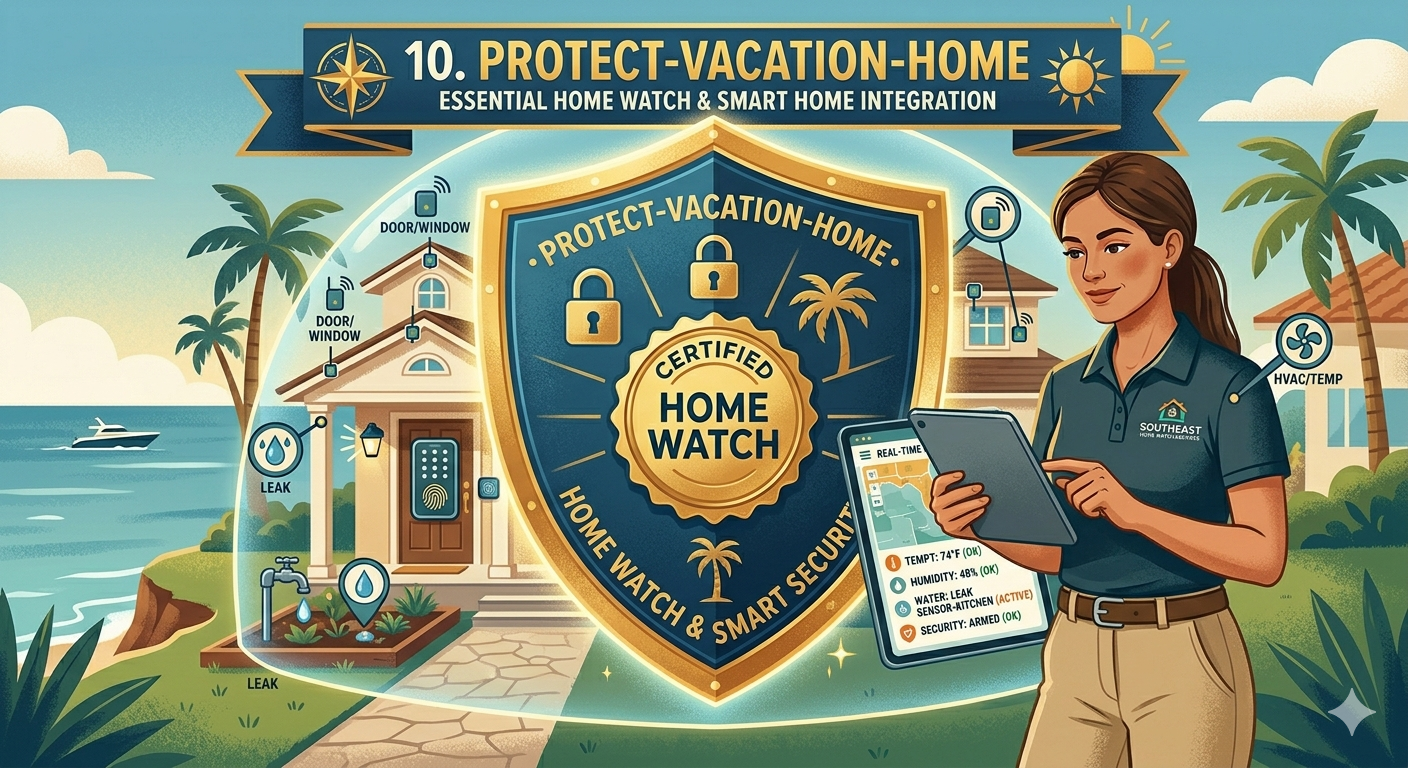
Owning a vacation home is one of life's great pleasures — until something goes wrong while you're not there. A burst pipe, a failed HVAC system, a break-in, storm damage left unaddressed — these are the scenarios that keep second homeowners up at night. The good news is that most of the risk is manageable with the right preparation and the right professionals in place.
Here's a comprehensive guide to protecting your vacation home while you're away.
1. Hire a Professional Home Watch Service
This is the single most important thing you can do to protect a vacant property. A professional home watch company conducts scheduled physical inspections of your home, documents its condition, and responds quickly when something needs attention.
Unlike a neighbor checking in, a home watch professional is trained to spot early warning signs — a drip that becomes a leak, condensation that becomes mold, a pest entry point that becomes an infestation. They carry insurance, provide detailed documentation, and can coordinate emergency repairs on your behalf.
For any home that sits vacant for more than a few weeks at a time, professional home watch is the foundation of a solid protection strategy.
2. Install Smart Home Monitoring
Smart home technology doesn't replace professional home watch, but it's an excellent supplement. Key devices to consider:
- Water leak sensors: Place these under sinks, near the water heater, and around appliances. They'll alert you immediately if water is detected.
- Smart thermostat: Monitor and control your HVAC remotely. Set temperature alerts so you know immediately if the system fails.
- Security cameras: Exterior cameras deter break-ins and give you visual confirmation of your property's condition between visits.
- Smart door locks: Allow you to grant and revoke access remotely — useful for contractors, home watch professionals, and emergency responders.
- Smoke and CO detectors: Connected devices that alert your phone (not just an in-home alarm) if smoke or carbon monoxide is detected.
3. Prepare Your Home Before You Leave
A few hours of preparation before your departure can prevent a long list of potential problems:
- Set your thermostat to an appropriate temperature for the season — typically 78-80°F in summer for humidity control, 55°F minimum in winter to prevent frozen pipes
- Turn off the ice maker and water supply to the refrigerator
- Shut off the main water supply valve if you'll be gone for an extended period (check with your home watch professional about this — some situations call for leaving water on)
- Unplug non-essential appliances and electronics
- Remove all perishable food from the refrigerator and pantry
- Bring all outdoor furniture, cushions, and loose items inside or store them securely
- Set timers on interior lights to create the appearance of occupancy
- Forward your mail or arrange for your home watch company to collect it
- Notify your home watch company of your departure and return dates
- Leave a key with your home watch company along with alarm codes and emergency contact information
4. Review Your Insurance Coverage
Many homeowners discover too late that their standard homeowners insurance policy has limitations for vacant properties. Before you leave for an extended period:
- Call your insurance company and ask specifically about their vacant property provisions
- Find out if your policy requires periodic inspections for full coverage to remain in effect
- Ask whether they offer a vacancy endorsement for homes that are empty for extended periods
- Make sure your coverage limits are adequate for the current replacement value of your home and its contents
5. Establish Relationships with Local Service Providers
When something goes wrong at your vacation home, you need people who can respond quickly and who you trust. Before you have an emergency, establish relationships with:
- A local plumber
- An HVAC contractor
- A licensed electrician
- A general handyman or contractor
- A local locksmith
Your home watch company will often already have established relationships with reliable local contractors — this is one of the underappreciated benefits of having a professional watching your home. When a problem arises, they can call a trusted provider rather than searching the internet for whoever's available.
6. Plan for Storm Season
If your vacation home is in a hurricane-prone or severe weather area, storm preparation needs to be part of your annual plan. Work with your home watch company to:
- Ensure hurricane shutters or storm panels are in working order
- Have a plan for pre-storm preparation if a storm approaches
- Schedule a post-storm inspection immediately after any significant weather event
- Document the pre-storm condition of your property for insurance purposes
7. Document Everything
Before you leave your vacation home each time, take a thorough video walkthrough of the property — inside and out. Document the condition of appliances, fixtures, floors, ceilings, and exterior features. Store this documentation in a cloud service so you have it accessible from anywhere.
Combined with the regular inspection reports from your home watch company, this documentation gives you a clear record of your property's condition over time — invaluable in the event of an insurance claim or a dispute with a contractor.
Understand Your Vacation Home's Risk Profile
Take a free 3-minute home vulnerability assessment and get a personalized report — plus connect with a local home watch professional who can help protect your property.
Try the Free Assessment For Home Watch ProfessionalsThe Bottom Line
Protecting a vacation home while you're away requires a layered approach — professional home watch, smart technology, proper insurance, pre-departure preparation, and trusted local relationships. No single measure is sufficient on its own, but together they create a comprehensive safety net for your investment.
The homeowners who experience the worst outcomes are typically those who assumed nothing would go wrong. Don't be that homeowner. A small investment in the right protection measures will give you genuine peace of mind — and could save you from a catastrophic loss.
Stay in the loop
Get home watch industry tips and updates delivered to your inbox.